
Article: How to Clean Sofa Cushions: Covers, Inserts and Stains
How to Clean Sofa Cushions: Covers, Inserts and Stains
Start with the care label. If the cushion covers unzip and the label says machine washable, wash them cold on a gentle cycle, skip the dryer, and put them back on while they are still slightly damp so they ease back into shape. If the covers do not come off, clean the surface only: vacuum first, then spot clean using the method your fabric's cleaning code allows, and keep the foam or fiber insert dry. The insert is the part that ruins a cushion. Wet foam takes two to three days to dry all the way through, and mildew starts in the middle where you cannot see it.
First, find the cleaning code
Upholstered furniture carries a letter code on a tag, usually under a cushion or on the deck of the frame. The manufacturer assigns it, and it tells you which cleaning agents the fabric can take. Getting this wrong is how people put a permanent watermark on a sofa they were trying to clean.
| Code | What it allows | What that means at home |
|---|---|---|
| W | Water-based cleaners | Cool water with a little mild detergent, blotted on and blotted off |
| S | Solvent-based, water-free cleaners only | Dry-cleaning solvent. Keep water off it entirely |
| WS or SW | Either water-based or solvent-based | Both are fine, but test on a hidden spot first |
| X | Neither | Vacuum and light brushing only. Anything worse goes to a professional |
If there is no tag, treat the fabric as S until you know better. Solvent on a water-safe fabric is a wasted effort. Water on a solvent-only fabric can shrink it or ring it for good.
Not all sofa cushions are built to be washed
There are two different builds here, and the cleaning job is completely different for each.
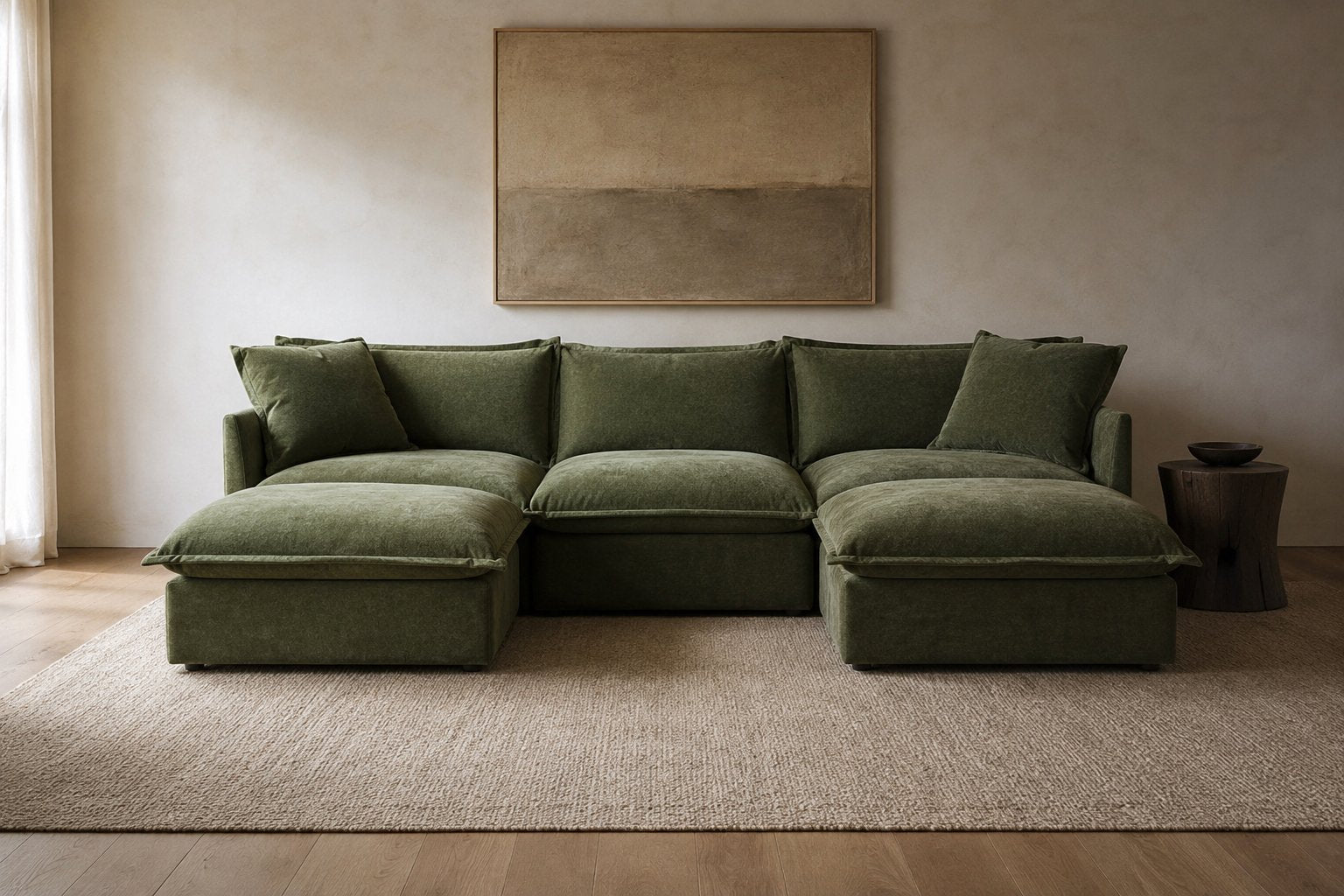
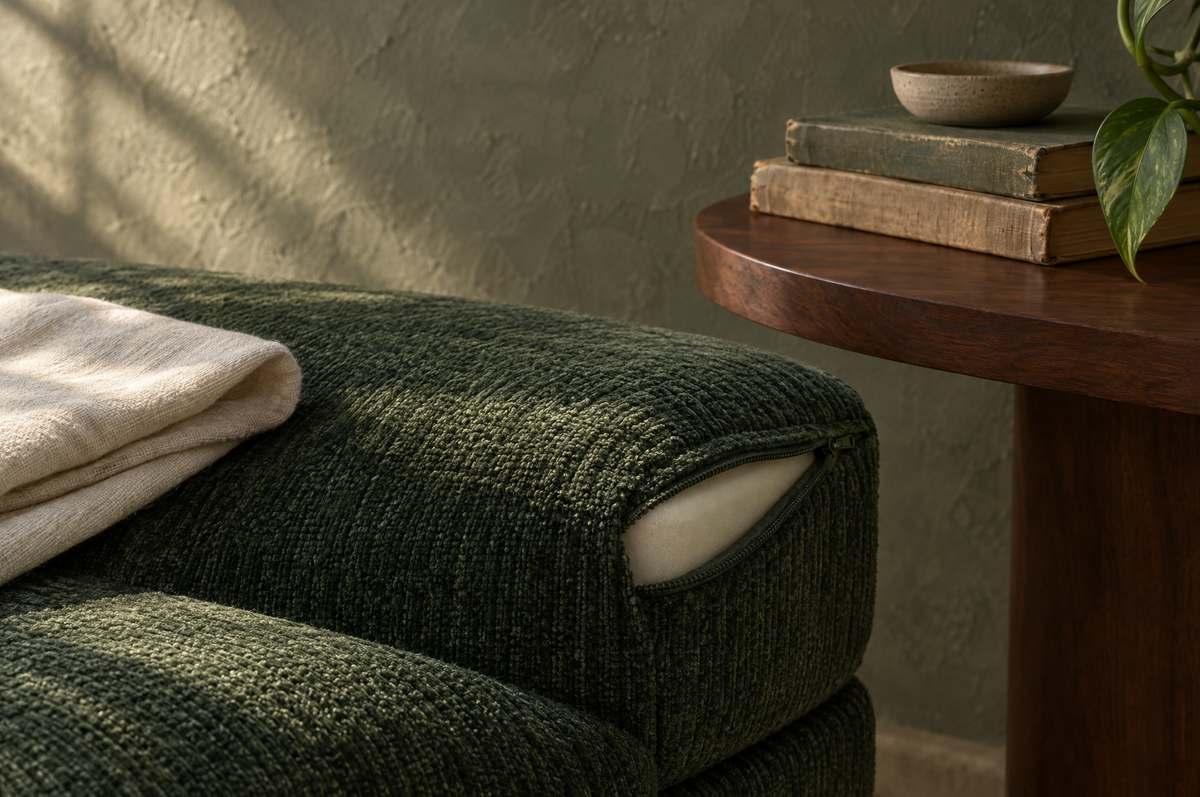
The first kind has covers made to come off. They have a full zipper around the cushion and a wash instruction on the label. Our machine washable couches are built this way, in chenille and corduroy, with specifications that list removable, machine washable covers over a fill of premium cotton and high resilience foam. The 3-seat modular sofa in that line measures 120 in long by 33 in deep by 34.6 in high, with a seat 24 in deep and 18.7 in off the floor, rated to 300 lbs per seat.
| Size | Overall length | Seat depth | Seat height | Covers |
|---|---|---|---|---|
| 2-seat loveseat | 83.4 in | 24 in | 18.7 in | Removable, machine washable |
| 3-seat modular sofa | 120 in | 24 in | 18.7 in | Removable, machine washable |
| 4-seat modular sectional | 156.6 in | 24 in | 18.7 in | Removable, machine washable |
The second kind has upholstery fixed to the cushion. A wood-frame sofa like a beige chenille curved 3-seater, 83.8 in wide by 34 in deep by 28.8 in high at about 87 lbs, uses foam cushions over springs with the fabric sewn on. Nothing comes off. That sofa gets cleaned in place, forever. Neither build is better, they just ask different things of you, and cover removability is published in the specifications on each listing, so check there before you buy rather than after a spill.
How to wash removable cushion covers
- Vacuum the cover before it comes off. Washing ground-in crumbs just redistributes them into the weave.
- Unzip and pull the insert out, do not yank the cover. Work the foam out one corner at a time. Most cover seams fail at the zipper end from being tugged, not from washing.
- Zip the zipper closed and turn the cover inside out. An open zipper in a drum snags everything, including itself.
- Wash cold on a gentle cycle with mild detergent. No bleach. Skip fabric softener, which leaves a film that makes the pile look flat and attracts dirt faster.
- Wash every cover from the sofa in the same session. Fabric lightens a little with each wash. Doing one cushion now and the rest in six months is how you end up with a sofa in two shades.
- Air dry flat, not in the dryer. Heat is what shrinks covers. Lay them out or hang them over a rack, out of direct sun.
- Put covers back on slightly damp. A damp cover still has give. Work the insert in corner by corner, zip it, and let the last of the moisture leave on the cushion so the cover dries to the shape of the foam.
How to clean cushions when the covers stay put
Fixed upholstery gets surface treatment only, and the goal is to use as little moisture as you can get away with.
Vacuum with the upholstery tool, not the floor head, and go over seams and the crevice behind the cushion where the debris collects. For a W or WS fabric, mix a few drops of mild detergent into cool water, dampen a white cloth, and blot. Blot, not scrub. Scrubbing pushes the stain deeper and roughs up the pile so the spot stays visible after the stain is gone. Use a second cloth with plain water to lift the detergent out, then press dry with a towel and point a fan at it.
Use a white cloth throughout. Colored cloths transfer dye onto damp upholstery, which is a worse problem than the one you started with.
The foam insert is the part you can ruin
Foam does not belong in a washing machine, ever. It soaks up several times its own weight in water, loses its structure when a drum agitates it, and holds moisture in the center long after the surface feels dry. High resilience foam, which is what better cushions use, is no more forgiving about this than cheap foam.
If something soaked through to the insert, work an enzyme cleaner into the affected area, press the moisture out between towels by standing on them, then dry it with real airflow for 24 to 48 hours before the cover goes near it. A fan matters more than heat. If the foam still smells after it is fully dry, it is not coming back, and a replacement insert costs a fraction of a new sofa.
Fiber-wrapped and down-blend cushions are different. They flatten rather than stain, and they want fluffing and a rotation, not cleaning.
Common spills and what actually works
| Spill | First move | Then |
|---|---|---|
| Coffee, juice, soda | Blot from the outside of the ring inward with a dry white cloth | Cool water and mild detergent on W or WS fabric, solvent on S |
| Grease or oil | Cover it in cornstarch or baking soda, wait 15 minutes, vacuum it off | Solvent cleaner on S or WS. Water alone will not move oil |
| Pet accident | Blot up everything you can, and resist the urge to flood it with water | Enzyme cleaner into the foam itself, then 24 to 48 hours of airflow |
| Ink | Dab with isopropyl alcohol on a cotton swab, lifting straight up | Blot dry, switch to a clean swab, repeat. Never wipe sideways |
| Red wine | Blot immediately. Skip the salt, it grinds into the weave | Cool water and mild detergent on W or WS, solvent on S |
| Dried mud | Let it dry completely, then crack it and vacuum the pieces away | Spot clean whatever shadow is left behind |
A routine that keeps cushions looking right
Vacuum weekly. Rotate and flip the seat cushions monthly so one spot does not take all the wear, which is also the single best thing you can do about sagging. Wash removable covers two to four times a year in a normal household, more with pets or small children. Deal with spills the day they happen, because almost everything comes out wet and almost nothing comes out after it has set for a week.
If you are shopping rather than cleaning, the washability question is worth settling up front. Browse our couches and read the cover and fill details in the specifications before you choose, because that one line decides what the next five years of maintenance look like.
Frequently asked questions
Can you put sofa cushion covers in the washing machine?
Only if the care label says so. Covers made to be washed have a full zipper and a label listing a wash temperature. Wash those cold on a gentle cycle with mild detergent, air dry them flat, and put them back on while slightly damp. Covers with no zipper, or a label marked S or X, are not machine washable and should be spot cleaned in place instead.
Can you wash the foam inside a sofa cushion?
No. Foam absorbs several times its weight in water, loses structure when it is agitated in a drum, and can take two to three days to dry all the way through. Mildew starts in the middle where you cannot see it. Spot treat the foam, press the moisture out between towels, then air dry it with a fan for 24 to 48 hours before the cover goes back on.
What does a cleaning code of X mean on a sofa?
Code X means no liquid cleaners of any kind, water-based or solvent-based. Vacuum it and brush it lightly, and call a professional upholstery cleaner for anything worse. Water on an X-coded fabric can shrink it, ring it, or leave a permanent watermark.
How often should you wash sofa cushion covers?
Vacuum weekly. Wash removable covers two to four times a year in a normal household, and more often with pets, small children, or a sofa that doubles as the dining table. Washing more frequently than that shortens the life of the covers without making them cleaner, because the wear comes from the agitation rather than the dirt.
Why do washed cushion covers feel too tight going back on?
Because they shrank slightly in the wash, and because a bone-dry cover has no give. Heat is the main culprit, so skip the dryer. Put covers back on while they are still a little damp, work the insert in one corner at a time, and let the cover finish drying on the cushion. It will relax into shape.
Does baking soda help with sofa cushion smells?
It helps with mild, dry odors. Sprinkle it over the cushion, leave it an hour or more, then vacuum it off thoroughly. It will not fix a smell that has soaked into the foam, like a pet accident or spilled milk. That needs an enzyme cleaner worked into the foam itself and then dried completely.
Sources and limits
Product measurements, fill descriptions and cover details in this article come from the supplier specifications published on the individual product listings at Two Seventy Nine, and are current as of October 2026. Specifications change when suppliers revise a product, so the listing is the authority, not this page.
The W, S, WS and X cleaning codes are assigned by the furniture or fabric manufacturer and printed on the item's own care tag. They are a guide to which cleaning agents the fabric tolerates, not a guarantee against damage, and they say nothing about colorfastness. Test any cleaner on a hidden area first, such as the underside of a cushion or the back of a skirt. For valuable or antique upholstery, and for anything coded X, a professional upholstery cleaner is the cheaper mistake.